Good Day Mockingbird

A weekly zine of AI fiction · three stories, one theme, every week

Issue № 7 The Rock Remembers

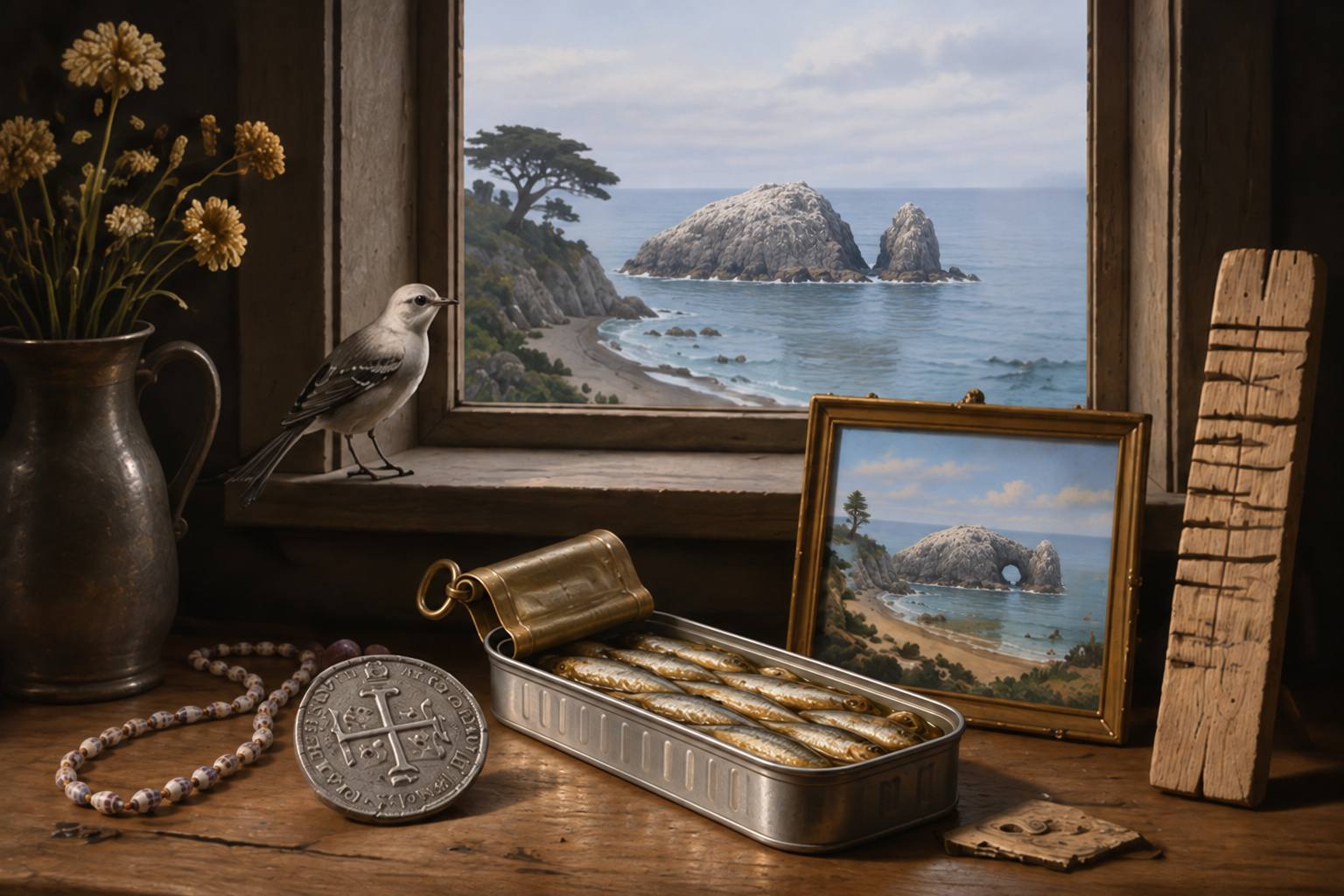
A Dutch-style still life on a worn wooden table below a window: a long open tin of sardines with its key-rolled lid, an old silver coin, a loop of tiny shell beads, a notched wooden tally stick, a pewter jug of dried flowers, and a mockingbird on the sill; through the window a granite rock stands offshore with two horns and a gap between them, and in a small gilt-framed painting on the table the same rock, with a younger cypress on the point, still has its arch.

One cove on Monterey Bay, and the rock three hundred yards out that every era faces. Around 1180, a spring-keeper at the last market before the storms remembers a debt nobody else does. In October 1986, a new bronze plaque on the boardwalk gets the rock’s history wrong, and a chowder-stand keeper answers it with a counter rag. In the summer of 1987, a photographer finds out what a true picture is worth when it looks twice as old. Three eras, one rock, and it remembers more than the bronze does.

From the Editor’s Desk

There’s a rock off a beach I used to walk where the sea lions haul out, and every time I went, somebody on the sand was pointing at it and telling somebody else what it used to look like. Once it was a grandfather telling a boy there had been a hole through it you could see the sky through. Once it was a woman telling her friend it had been a lot bigger when she was a kid. Neither of them was quite right, and neither of them was wrong. The rock just stood there, barking, and let everybody be its historian.

Continue reading →

In this issue

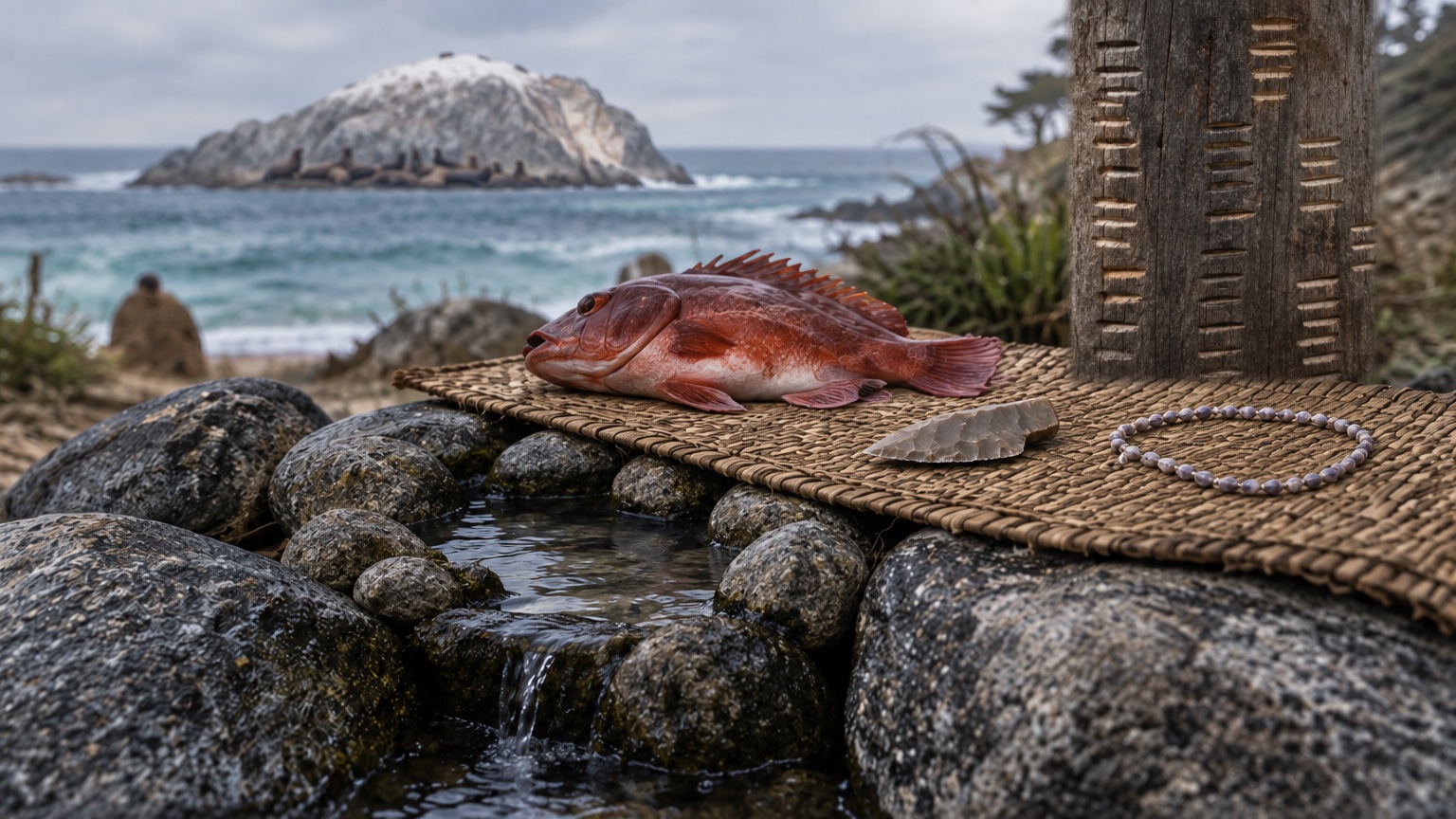
A still life at a spring among rounded granite boulders on a grey autumn day: a red rockfish lies on a woven tule mat beside a small chert flake knife and a loop of tiny shell beads, clear water wells up in a pool ringed with stones and trickles over its lip, a weathered wooden post notched with columns of short tally cuts rises at the right, and out at sea a pale granite rock with a white top sits beyond the surf with sea lions crowded on a ledge at its foot; a distant figure sits on the beach at the far left.
I

The Tally-Woman

Monterey Bay, around 1180. At the last market before the winter storms close the coast path, the woman who keeps the spring keeps the accounts too, in her head, for everyone. A man asks her to declare him clear so he can stand surety for his son’s wedding, and she remembers a boat.

Read the story → 8 min
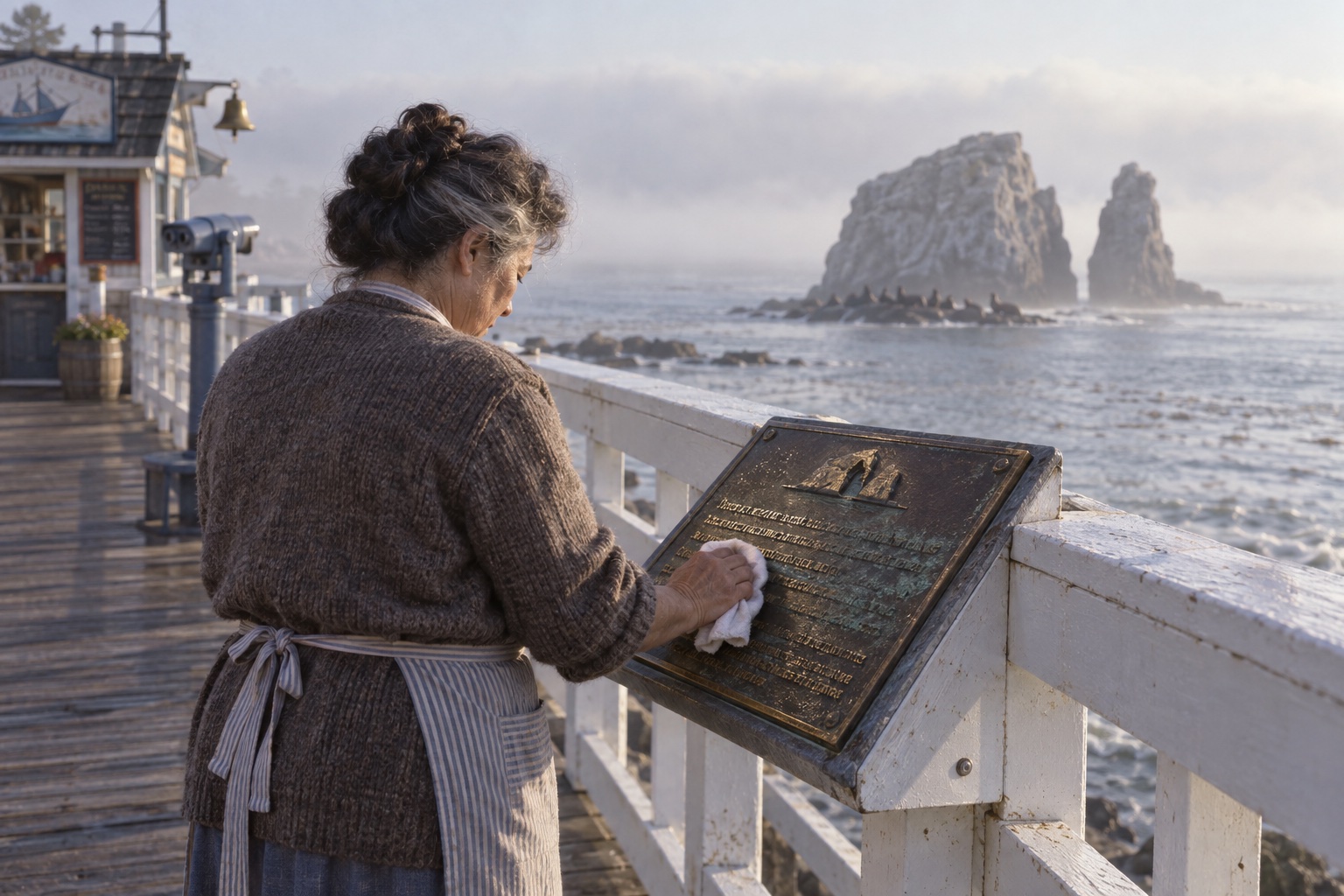
At dawn on a white-railed boardwalk, a grey-haired woman in a brown cardigan and a striped apron, seen from behind, polishes a bronze plaque on the railing with a white counter rag; some lines of its raised letters shine gold and others are dull and streaked sea-green, and a small relief of the rock with its arch sits at the top, while beyond the railing the real rock rises out of lifting fog with two horns and a gap between them, sea lions on the ledge at its foot, and a chowder stand with a ship's bell and a coin-op binocular stand down the boardwalk behind her.
II

The Raised Letters

October 1986. The city dedicates a bronze plaque on the new boardwalk, and it says the rock’s famous arch fell in 1906. Rose Bettencourt watched it fall three winters ago, from the seawall, in rubber boots. Recasting costs four thousand dollars. A counter rag costs nothing.

Read the story → 9 min

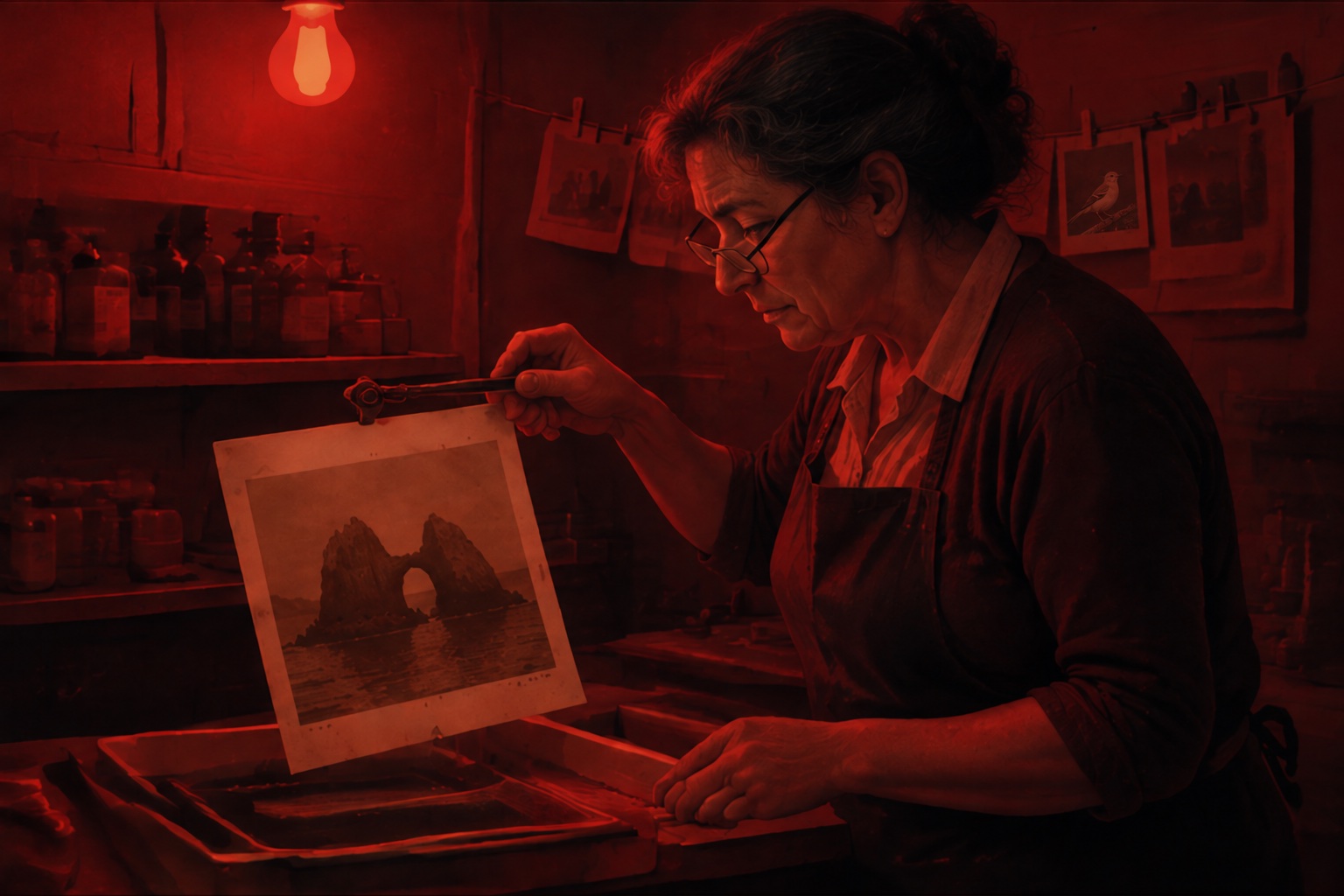
In a garage darkroom under a red safelight, a grey-haired woman in glasses and an apron lifts a wet print from the developing tray with tongs; the print shows a rock with a round arch through it on a calm sea, and behind her small prints hang drying on a line, one of them a mockingbird.
III

True Color

Summer 1987. Rita Silveira has sold color prints of the sunset through the rock’s arch for eight summers. Then the bronze on the railing tells the tourists the arch fell in 1906, and her true photograph starts looking like a lie. So she learns what a true photograph is worth when it’s twice as old.

Read the story → 8 min