Issue № 13 · Story I
Five Cents
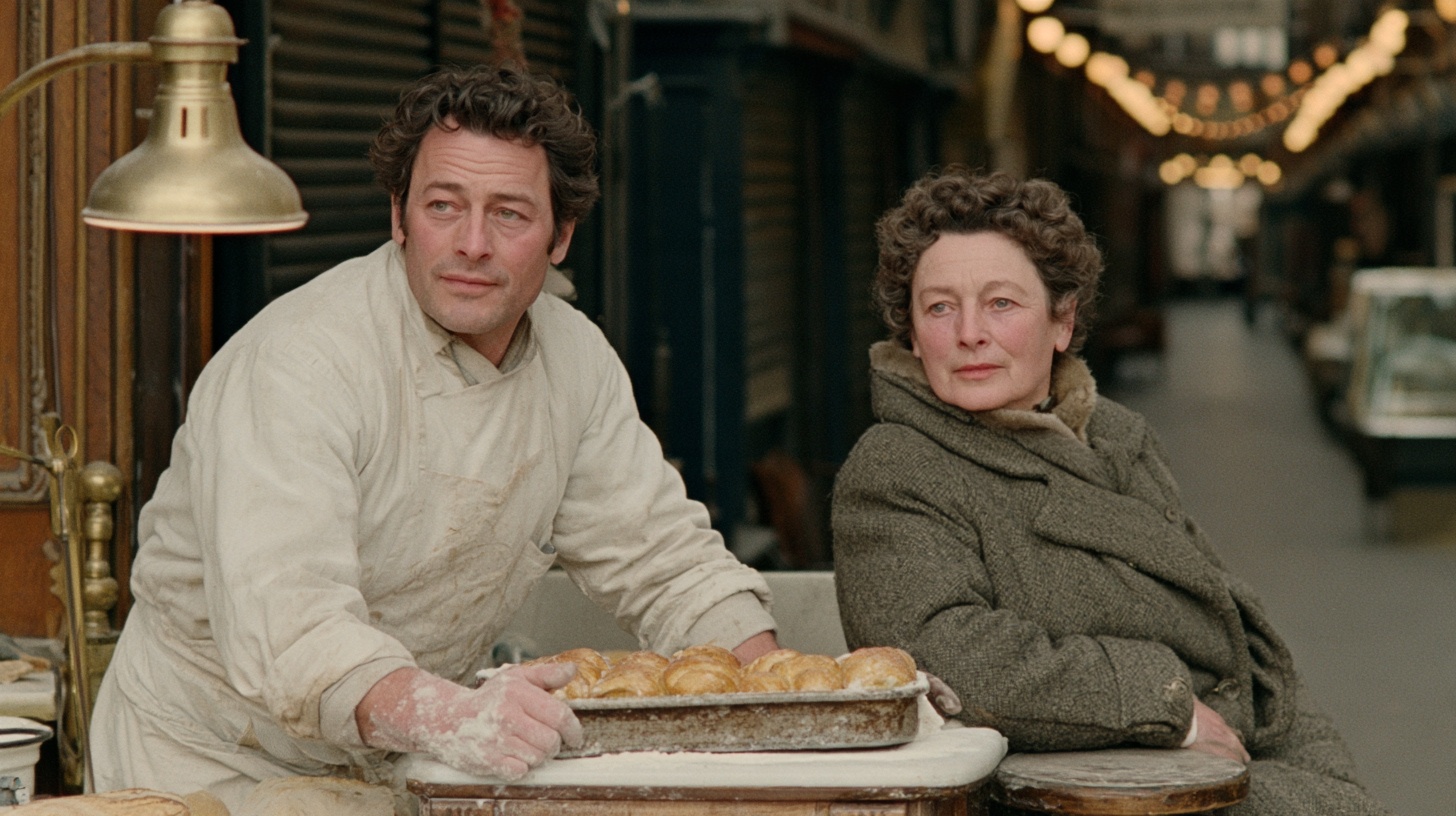
Montreal, the Marché Saint-Rémi, 1977. Armand Thibodeau’s father priced the little roll at a nickel in the worst year of the Depression, and twelve hundred of them still go over the counter every day, at three cents under cost. Flour has tripled, the stall rent is up by half, and every February his wife does the numbers at the kitchen table. Then the television comes to film the last nickel in the city.
The sign was older than most of the market. Hand-painted in 1931, black on white, P’TIT PAIN 5¢, and under it, smaller, in his father’s French and then his father’s English, same price both languages. Armand Thibodeau had repainted the board twice in forty-six years, careful as a forger, and had never once repainted the number.
The roll itself was nothing. That was the point of it. A small white roll, palm-sized, crust you could hear, crumb you could press your thumb into, baked in trays of sixty from four in the morning at stall nineteen of the Marché Saint-Rémi. His father had set the price in the worst year of the Depression, when the stall was new and the neighborhood was hungry, and a man could stand at the counter with one coin and leave with something warm, no permission required, no gratitude collected. By 1977 the neighborhood had cars and the market had tourists, and the five-cent roll was the last nickel anything on the island of Montreal, and twelve hundred of them went over the counter every day into the hands of schoolkids, pensioners, lawyers, nuns, cab drivers, and men who had eaten one every morning since Duplessis and would have told you, if asked, that the price was simply what the roll cost, the way water is wet.
The bake itself never changed either. Four in the morning, the sponge from the night before, the long black peel his father had worn smooth, trays of sixty into the old deck oven, and the first batch out by six so the smell could go ahead of the market like a crier. People bought them hot and ate them walking, one hand, no bag, and a man who sells something eaten in forty steps learns the whole city by its chewing.
The price was not what the roll cost. The price was a wall with Armand standing behind it.
Flour had tripled in four years. Butter was a crime, sugar was a scandal, and in January the market corporation, which had new management and a new logo, raised the stall rents by half to pay for the renovation nobody had asked for. Pauline did the month’s numbers at the kitchen table in February the twelfth year running, and put down the pencil, and said what she had said every February, which was that the little roll was eating them. Three cents under cost now, on twelve hundred a day. She said the yearly number out loud and let it sit on the oilcloth between them.
The fancy breads carry it, Armand said, which had been true for decades and this February was not.
You carry it, Pauline said. On your back. Your father carried it, now you. Forty-six years in this family, somebody eats the difference, and it was never once a customer.
He knew she was right the way you know a thing for years before you let it upstairs. He was forty-seven. He had been pricing his own labor at zero since he was a boy, because the nickel only balanced if the baker was free. The renovation had put track lighting over his stall that made the rolls look like jewelry, and the rent for the lighting had come due, and still he held through February, and through March, and the holding had its own small costs that never touched the books. His winter coat went a third winter. Pauline’s new glasses waited. He started eating his lunch standing at the ovens, bread ends and coffee, a man surrounded by food all day who had quietly stopped buying any.
Then in April the television came, which finished him, though it took him a while to understand that.
A crew from the English station, then a week later the French one, both with the same story: the last nickel in Montreal. They filmed his hands, the board, the coin cup. A columnist called the stall a time machine and the roll a civic treasure, and wrote that in an age of this and an age of that, one man still remembered. Armand read it at the counter and felt the wall at his back grow a story taller. You cannot raise a price quietly once it has been on television. The nickel no longer belonged to him. It had become proof of something, for other people, about the world, and nobody who needs proof of something ever asks what it costs the man holding the evidence.
The regulars arranged themselves around the price like a congregation, and no two of them worshipped alike. The Saint-Barthélemy boys came at a quarter to four with their nickels sweated from holding, and bought with the seriousness of men paying a mortgage, and that transaction, old as the board, was the one Armand privately considered the stall’s whole license to exist.
Maître Prill came Tuesdays and Fridays, a lawyer from the new towers, cashmere coat, and bought one roll, one, and paid with a twenty so that the making of change became a small ceremony performed for him, and while Armand counted out nineteen dollars and ninety-five cents Prill liked to say things like, don’t you ever change, Armand, this is the last honest place in the city. He said the word honest with his coat on. Some mornings he brought a visiting colleague the way you’d bring someone to see a heritage building, and the colleague would smile at the board, and at Armand a little, and Armand would feel, briefly, like the lighting: installed.
Madame Deslauriers came every day at eight. Widow, eighty-one, fourth floor walkup on Rue Casgrain, and Armand knew, because a baker knows, that the roll was not a charming habit for her. It was breakfast, arithmetic, the fixed point her small pension steered by. For her and maybe forty like her the nickel was still doing in 1977 exactly what his father built it to do in 1931. They were the reason he had never moved the number. They were the wall’s foundation, and Prill was the flag somebody else had planted on top of it.
All through that spring Armand ran the stall like a man bailing quietly so the passengers won’t look up. He shaved his own draw to nothing. He let the boy go who did Saturdays and worked the seventh day himself. Pauline watched him do it and said, once, in the dark: your father died at this. Fifty-nine, she did not say, at the ovens, she did not say. She didn’t have to. The whole marriage heard it.
It was Madame Deslauriers who let him out, the second week of May, and she did it like a woman returning something that had been left at her door by mistake.
She waited until the counter was empty. She set her nickel down and then put her hand flat over it, keeping it, and looked at him through glasses thick as paperweights.
Armand. What does this roll cost you to make?
He told her. He had never told anyone but Pauline. Her mouth went thin.
Then you listen to me, she said. I lived the war. Ration books, brown sugar once a month, I know to the penny what things cost, it’s the only arithmetic I’m good at anymore. Charge me what bread costs. You think my dignity is five cents? My dignity is that I pay what a thing is worth and go home with it, same as anyone, and your pity has been sitting in my breakfast for years and I am old enough now to say I don’t like the taste. She pushed the nickel across. It’s the rich who need your little museum, mon gars. Charge them admission.
The new board went up on a Monday in June, same paint, same careful hand. P’TIT PAIN 15¢. Still under cost of the chain bakery’s roll across the aisle, still a little under his own true cost, because forty-six years doesn’t come out of a man in one coat of paint. He had sat up two nights with the brush and Pauline had sat with him, not helping, witnessing.
The market behaved like a parish that has caught the priest stealing. Some people simply paid, the schoolkids, the cab drivers, most of the nuns. Some paid and made sure he saw their faces doing it. A man he had served for twenty years called him a profiteer, pronounced carefully, both languages, and the woman from the cheese stall, who paid four hundred more a month in rent herself, came over specially to say she was disappointed, as though he had been keeping the nickel for her.
And Maître Prill made his speech. Friday, peak crowd, cashmere in June. He held the roll up like evidence and gave the counter three minutes on tradition, on trust, on how some things in a city must stand outside the market or the city loses its soul, his voice doing the courtroom swell, and the aisle stopped to listen, and he finished with, your father would be ashamed.
Armand had been awake since three, and found he was done being a building.
My father died at fifty-nine eating the difference, he said, and it came out at full volume, the first time the market had ever heard the baker loud. You want the ledger, maître, here it is, free of charge. Flour, three times what it was. Rent, half again since January, those lights you like are on my bill. Twelve hundred rolls a day at three cents under cost, you’re the lawyer, do the arithmetic, it’s thirteen thousand dollars a year, that’s the soul of your city, monsieur, it has a number, and for forty-six years the man eating it was standing right here. Not once was it you. You bought one roll with a twenty-dollar bill twice a week and called me honest and you have never once in your life been curious what honesty costs. Fifteen cents. Pay it or the chain sells a roll for a quarter, and they will be delighted to see you, and nobody over there will know your name.
Prill paid it. He never came back, which told Armand what the roll had been to him better than any speech. Madame Deslauriers came at eight the next morning, paid her fifteen cents, counted her change with wartime precision, and gave him one short nod across the counter, dignity to dignity, the only transaction all week that felt settled in full.
The fury lasted into July and then the city forgave him, as cities do, by forgetting, and the forgetting stung worse than the anger. Twelve hundred rolls went back to selling out by noon. The Saint-Barthélemy boys adjusted inside a week, pooling coins on the counter with the gravity of a central bank, and one of them asked him, man to man, whether the roll was bigger now, and Armand said no, only truer, and the boy nodded like credit had been established. The television did not return; a raised price is not a story, it is only true. The columnist never corrected the time machine. In August the market corporation put his stall on the cover of their new brochure, the board freshly photographed, 15¢ and all, heritage by the pound, and billed him nothing for the honor, which Pauline said was progress.
She got the glasses. He got the coat, in September, good wool, heavy, and his draw came out of the till every Friday now like anyone’s wages, and the first morning of the cold weather he did something he had not done since his father stood at these ovens. He took one of his own rolls off the tray for his breakfast, and rang it in, and dropped the coins in the till, his own customer at last, and stood eating it at the counter while the market came awake, tasting, with his whole attention, what the thing had cost.
♥ 2026 Claire Jacobs · CC BY 4.0 · a story from Good Day Mockingbird № 13