
Good Day Mockingbird

Issue № 13 The Provisions

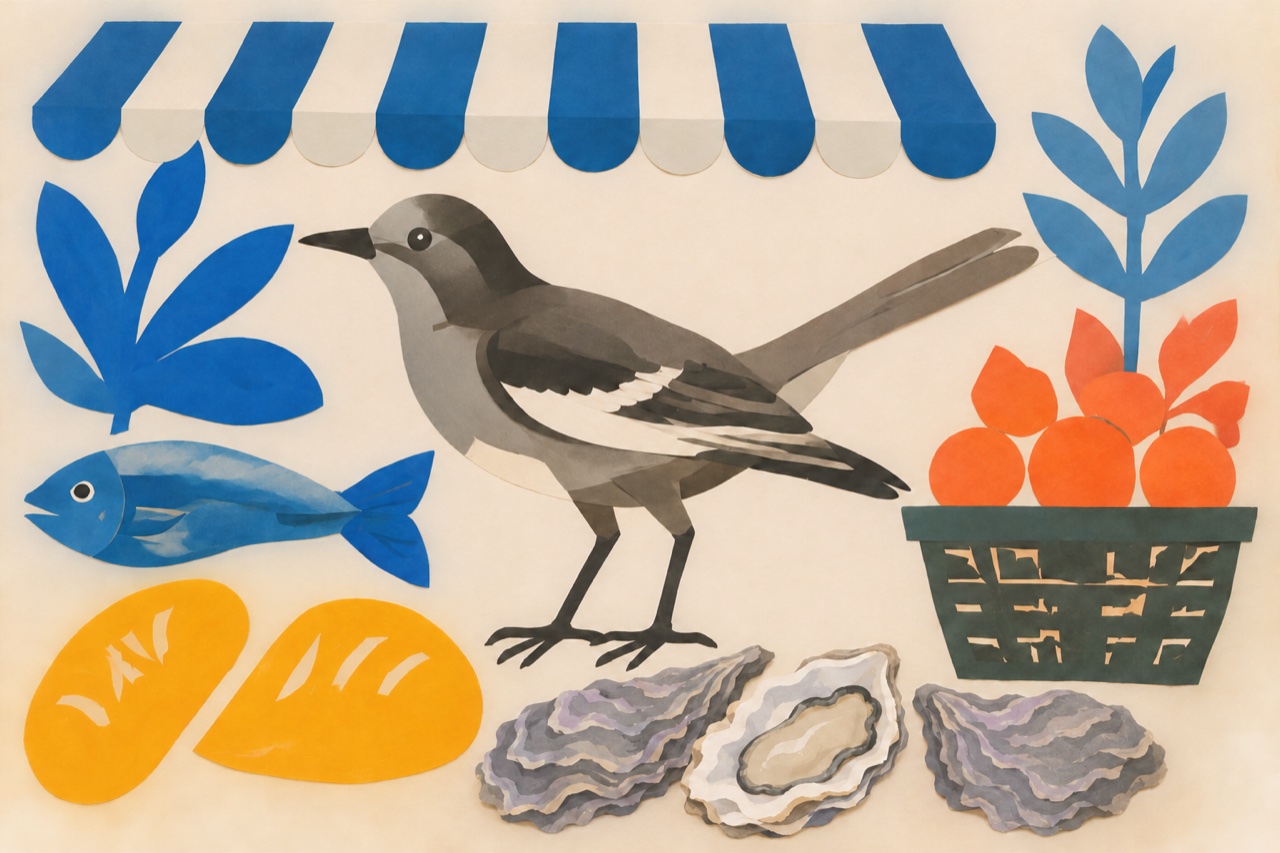
A Matisse-style cut-paper picture on cream paper, a cobalt-and-white striped market awning across the top, a big grey mockingbird standing in the middle, a blue fish and two yellow loaves at the left, a dark basket heaped with orange fruit at the right, and three oysters along the bottom, two closed in ruffled grey and lilac shells and one open and pearly on its cupped shell.

Three things to eat, and who is looking at them. In Montreal in 1977, a baker still sells his father’s roll at a nickel, three cents under cost, until the television comes to film the last nickel in the city. In a Kisumu fish plant in 2003, a filleter leaves a finger’s width of meat on every skeleton that goes out over the wall, until the frames are weighed. And at a Taipei night market, a cook makes one oyster omelette wrong on purpose, for a man with a ring light and three million followers.

From the Editor’s Desk

For years the bakery on the corner sold rolls by the dozen and put thirteen in the bag. Nobody mentioned it. You found the extra one at home, if you counted at all, and it felt like being remembered. Then the bakery changed hands, and the new owner, an honest man and a careful one, printed a little card for the counter: thirteen for the price of twelve. The rolls were the same rolls and the bag was the same bag. But now people counted at the counter, in front of him, and once in a while a woman came back to say she had only got twelve, and he gave her one, because the card said so. Within the year the card was gone, and so was the thirteenth roll, and nobody could say exactly when.

Continue reading →

In this issue

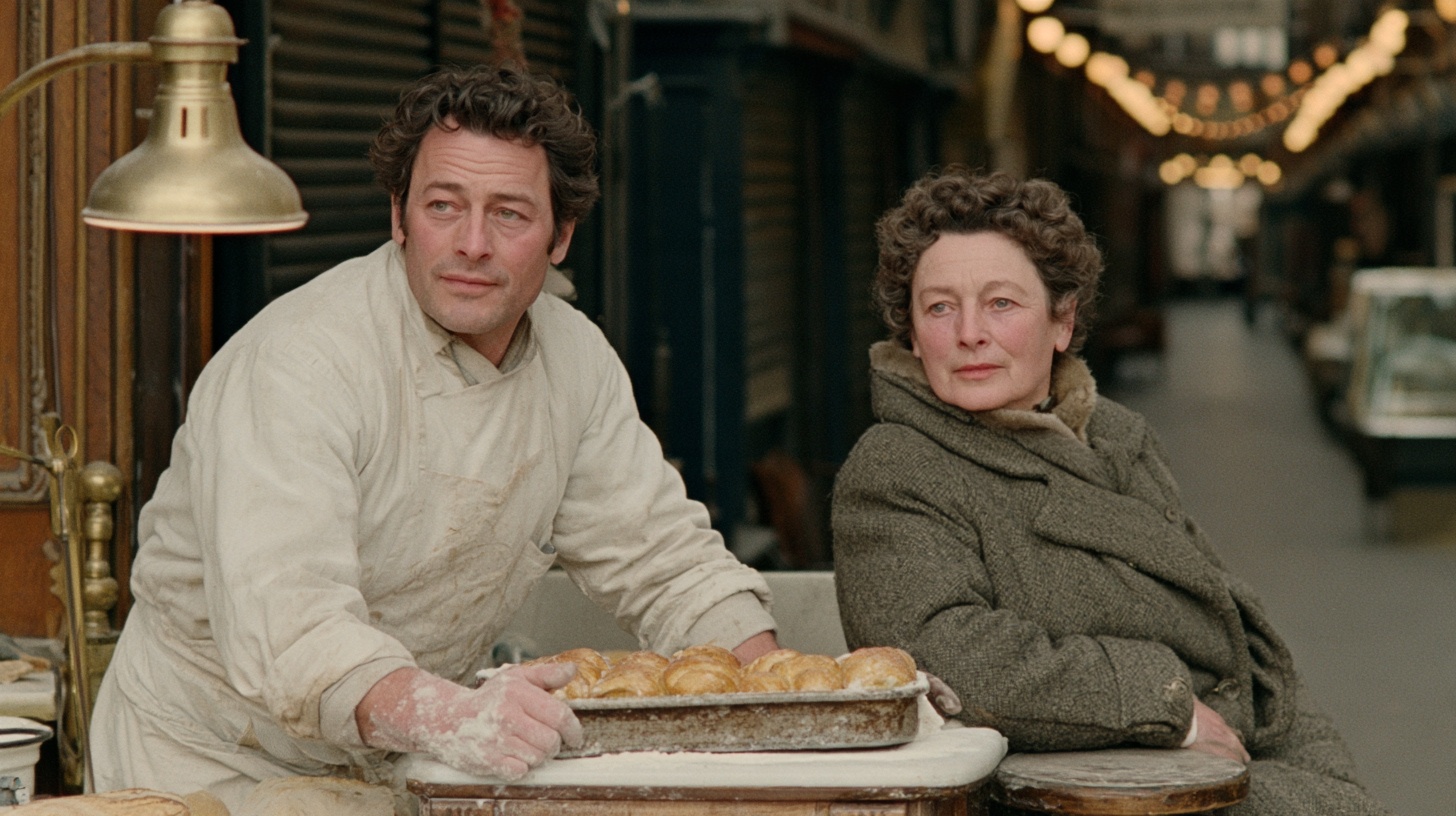
A color photograph with the look of a 1970s film still, a curly-haired baker in a flour-dusted white jacket leaning on a counter behind a tray of golden pastries, and beside him a woman with short curly hair in a heavy tweed coat, both looking off to the left, in a long covered market hall strung with lights.
I

Five Cents

Montreal, the Marché Saint-Rémi, 1977. Armand Thibodeau’s father priced the little roll at a nickel in the worst year of the Depression, and twelve hundred of them still go over the counter every day, at three cents under cost. Flour has tripled, the stall rent is up by half, and every February his wife does the numbers at the kitchen table. Then the television comes to film the last nickel in the city.

Read the story → 9 min
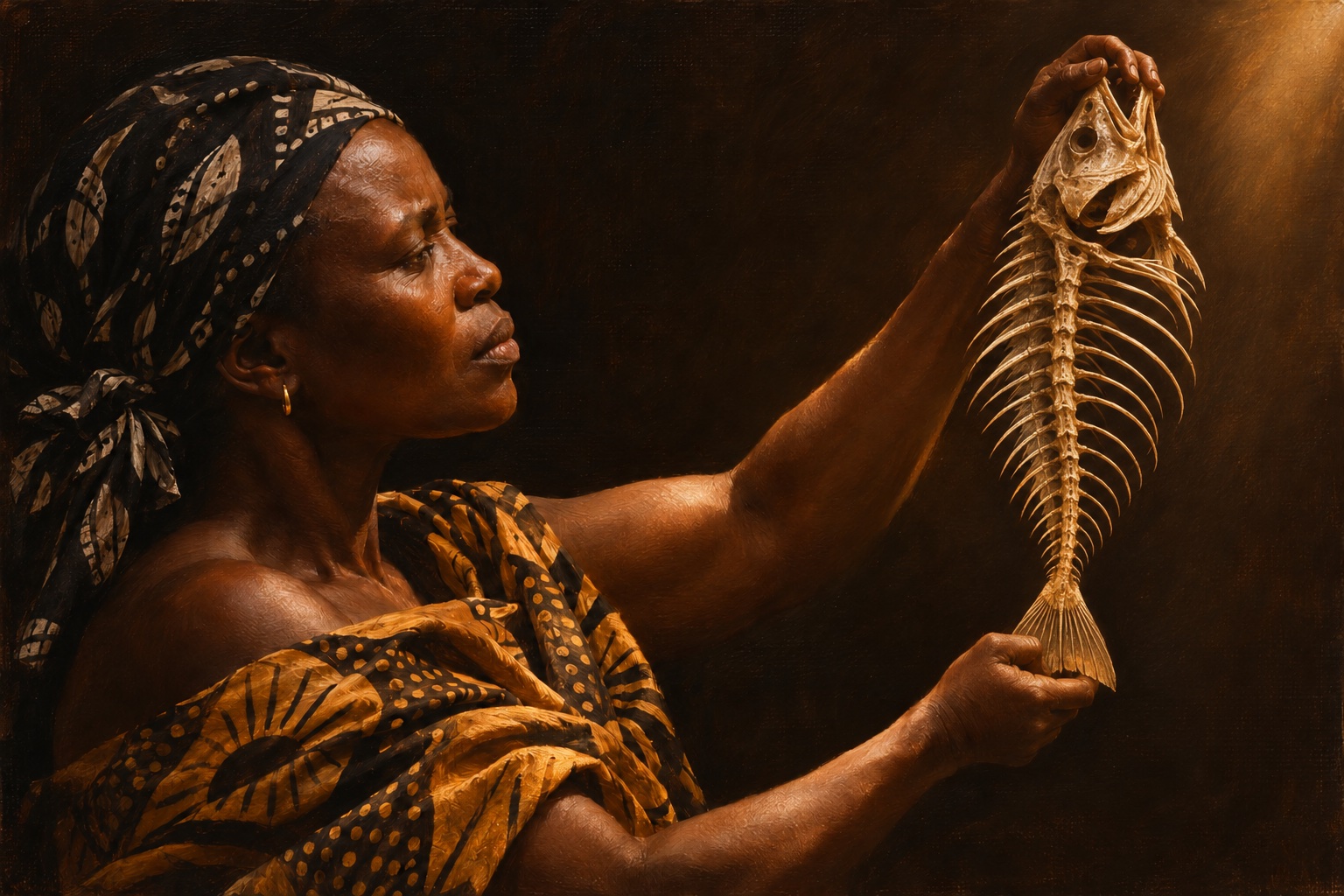
A Baroque chiaroscuro oil painting, a Kenyan woman in her forties in profile, in a dark patterned headscarf and an ochre-and-black printed wrapper, holding up the picked-clean skeleton of a Nile perch at arm's length against a warm raking light, the head gripped in her upper hand and the tail in her lower, the light coming through between the ribs.
II

Mgongo Wazi

Kisumu, October 2003. Otieno has filleted Nile perch at table seven for nine years, and he leaves a finger’s width of meat on every frame that goes out over the wall, where the women from Obunga buy the skeletons by the kilo to fry. They ask for his table by number. Then a fax comes from Osaka about fillets running thin along the back, and a new supervisor puts a scale at the end of the line.

Read the story → 8 min

A painterly color picture of a night-market food stall beside a red temple at dusk, an older woman in a floral blouse and green apron setting a plate of oyster omelette on a steel counter, a younger woman in office clothes reaching for plates behind her, an old man in a flat cap with a newspaper under his arm on a stool, a schoolboy counting coins in his palm, two diners eating at the counter, and Taipei 101 lit on the skyline.
III

The Normal One

Taipei, a neighbourhood night market, one Friday. Mrs. Huang makes a hundred and twenty plates of oyster omelette a night, which is what her right shoulder agrees to, and her daughter comes on Fridays to help with the plates. This Friday the daughter has written to a man with three million followers. He comes down the lane holding a ring light, and he says the name of the dish in Taiwanese, properly, as her mother said it.

Read the story → 10 min